Bonaire is known as one of the world’s most beautiful diving destinations. With crystal-clear waters, vibrant coral reefs, and remarkable biodiversity, the island attracts thousands of divers each year. However, behind this idyllic underwater world lies a range of medical risks. How are these managed on a relatively small and remote island?
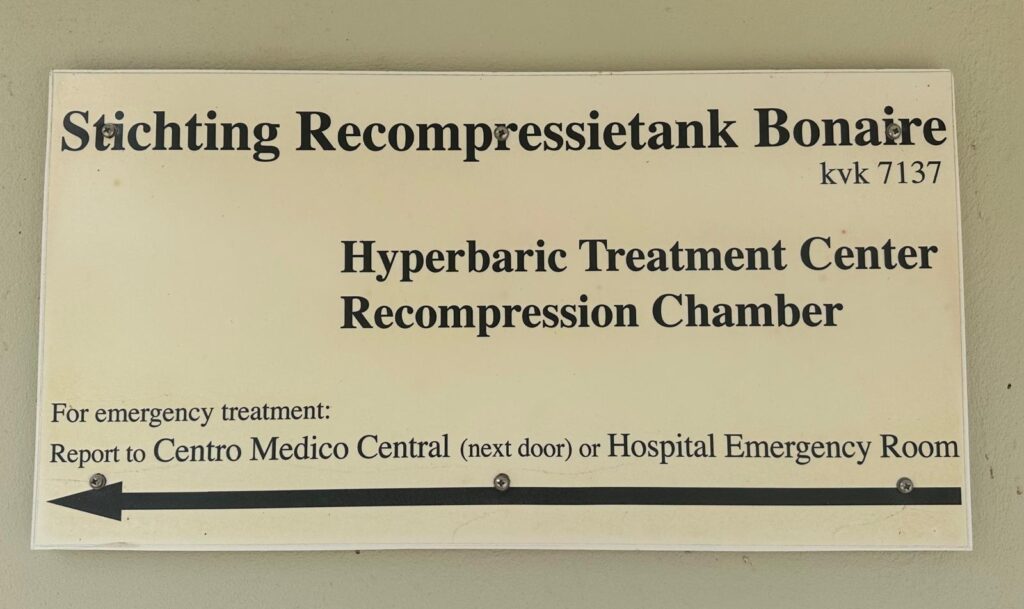
For this article, I spoke with three diving physicians working on Bonaire: Mignon Smit, Marianne Voesten, and Lucia Rodrigues. They share insights into their work on the island, the care of divers, and the role of the hyperbaric chamber.
Can you introduce yourselves?
Mignon Smit:
“I work as a general practitioner on Bonaire and also run a private practice providing diving medical assessments. In this role, I evaluate whether it is medically safe for individuals to dive, particularly those with chronic conditions or who use medication. For the past five years, I have also been involved in the recompression chamber. The combination of general practice and diving medicine makes my work especially rewarding, as it allows me to integrate my medical career with my passion for diving.”
Marianne Voesten:
“I have been working on Bonaire for over twenty years, although not always as a diving physician. My first encounter with the recompression chamber occurred while I was working as an anaesthesia assistant, when I became involved in the care of an acutely ill patient undergoing treatment in the chamber. That experience immediately sparked my interest in diving medicine. I subsequently obtained my PADI certification and was trained as a chamber assistant by Dr. Dick van der Vaart, the founder of the recompression chamber on Bonaire. A few years later I returned to the Netherlands to complete my general practice training, after which I came back to Bonaire. Since 2016, I have been working here as both a general practitioner and a diving physician. The work is highly rewarding, but also demanding!”
Lucia Rodrigues:
“I originally come from Brazil, where I specialised in infectious diseases and tropical medicine. I first visited Bonaire in 2012 and was immediately drawn to the island. My interest in diving began years earlier; I used my very first salary to obtain my PADI certification. Years later, I came into contact with Divers Alert Network and completed diving courses with NOAA in the United States. After gaining clinical experience in Brazil, I was invited to come to Bonaire in 2023 due to staff shortages. Since then, I have been working here with great pleasure with the team and nowadays I cover most of the shifts.
I am proud of what we have built here. What makes this work unique is that a physician is involved in every treatment decision, which is certainly not the standard worldwide.”
What is decompression sickness?
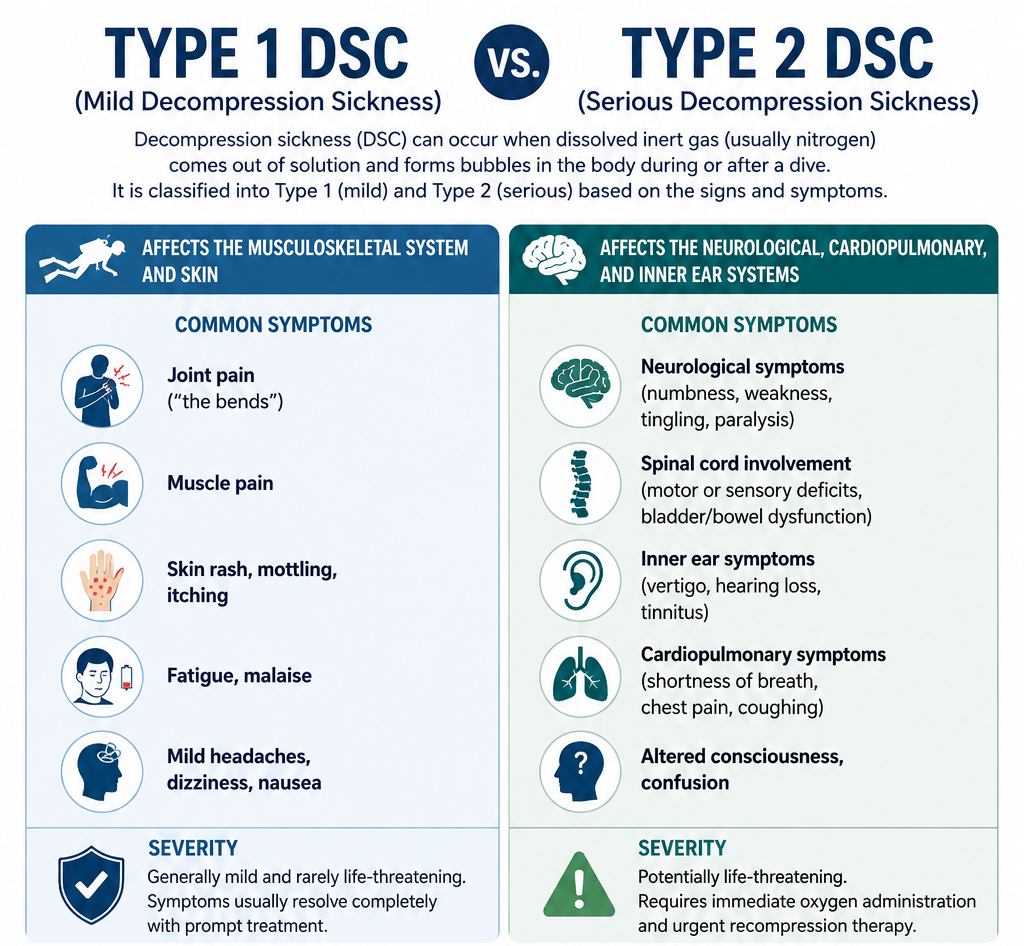
Decompression sickness occurs when a diver ascends too quickly, causing dissolved gases, primarily nitrogen, to form bubbles in the body. These bubbles can affect different organ systems, leading to a wide spectrum of symptoms. In mild cases (Type I), symptoms typically include joint pain, skin manifestations, or fatigue. In more severe cases (Type II), the nervous system, vestibular system, or lungs may be involved, resulting in neurological deficits or dizziness.
“Sometimes it can be difficult to diagnose decompression sickness,” says Dr. Smit. “The symptoms are not always immediately apparent and may present delayed.”
Do you want to read more about nitrogen narcosis? Then check out our previous post on the website here.
What is the treatment for decompression sickness?
Patients with suspected decompression sickness usually present via the emergency department. “Standard initial management includes immediate oxygen administration and intravenous fluid therapy,” explains Dr. Rodrigues. “Many divers are dehydrated upon arrival.” The on-call diving physician is then consulted to assess the patient and determine whether hyperbaric chamber treatment is required. “I need to be available 24/7 and ensure I can always respond. You never know when you will be called to the hospital,” she explains.
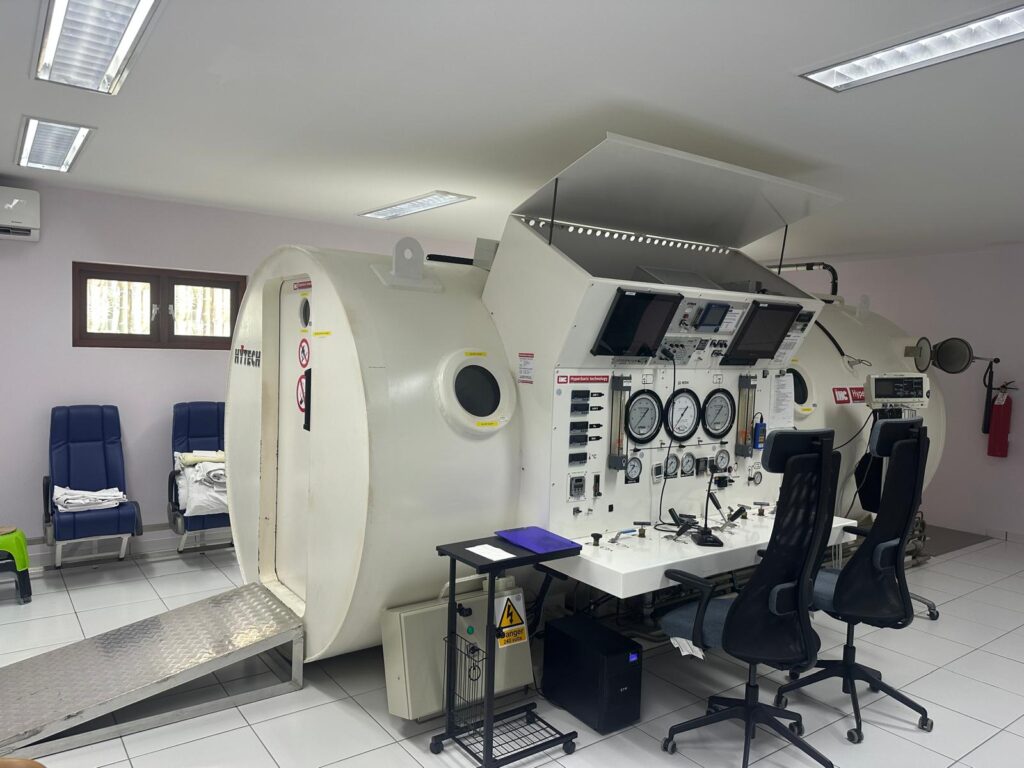
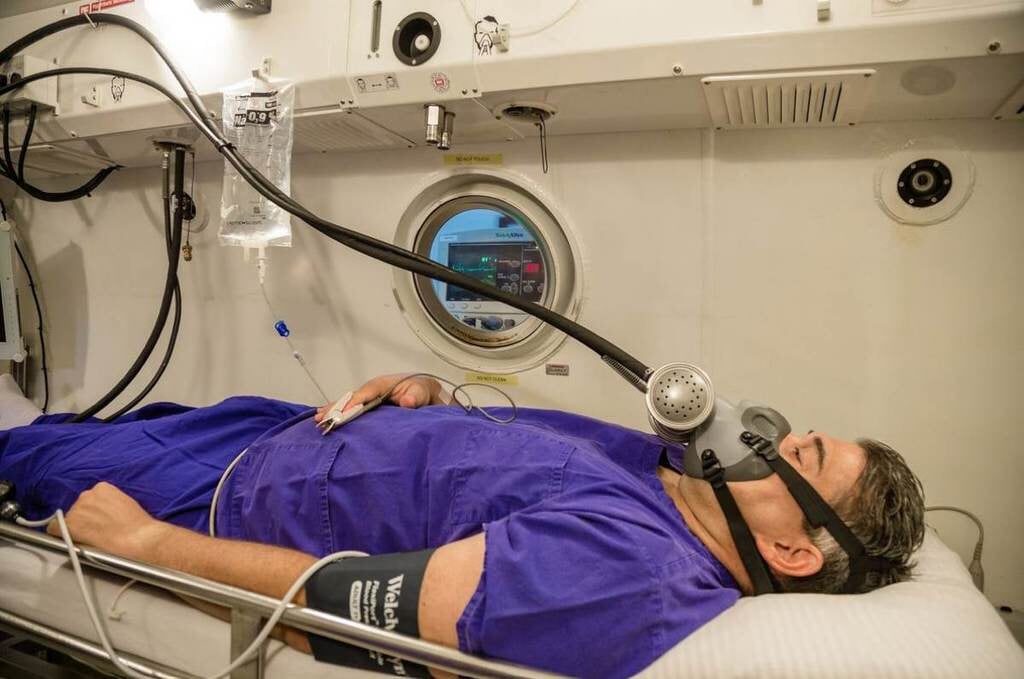
When hyperbaric oxygen therapy is indicated, the patient undergoes an intensive and strictly regulated treatment protocol. “Such treatments can be quite demanding,” says Dr. Voesten. “Patients are not allowed to bring phones or other distractions into the chamber due to safety risks. They also wear an oxygen mask, which limits communication and makes sleeping difficult, as proper ventilation is essential for optimal oxygen uptake.” The treatment team is also substantial. “At least four healthcare professionals are required per patient,” explains Dr. Rodrigues. “A nurse inside the chamber, an operator, a supervisor, and a physician outside.”
Treatment follows standardized protocols, known as tables, but is always tailored to the individual patient. Depending on severity, therapy may last several hours or require multiple sessions.”
What makes diving medicine so special for you?
“The work is extremely varied,” says Dr. Smit. “You never know what to expect. You also often see patients improve during treatment, which makes the impact immediate and highly rewarding.” For Dr. Rodrigues, the motivation lies mainly in patient experience: “You try to help people get through an intensive treatment as comfortably as possible. That really makes a difference for patients who initially came here for a relaxing diving holiday.”
How do you become a diving physician?
Hyperbaric medicine is not officially recognised as a medical specialty worldwide. ‘In some countries, it is part of emergency medicine or anaesthesiology,’ explains Dr. Rodrigues. ‘Training requirements and organisational structures vary significantly between countries.’” In Bonaire, and within the Dutch healthcare system, physicians combine their standard medical training with additional courses and specialised training in diving and hyperbaric medicine. The European Committee for Hyperbaric Medicine (ECHM) and the European Diving Technology Committee (EDTC) have established European guidelines that these training programmes must meet.For more information on training and educational opportunities, see: https://duikgeneeskunde.nl/scholing/opleiding/
References
Divers Alert Network (DAN). (2020). Decompression sickness. Health & Diving Reference Series. Edited by P. Denoble; authored by N. Pollock. ISBN 978-1-941027-32-5.
Chimiak, J., & Nord, D. A. (2025). Scuba diving: Decompression illness and other dive-related injuries. In E. S. Halsey, K. M. Angelo, E. D. Barnett, et al. (Eds.), CDC Yellow Book 2026: Health information for international travel. Centers for Disease Control and Prevention. https://www.ncbi.nlm.nih.gov/books/NBK620981/